
History hits differently when you’re standing inside it.
Textbooks explain the past. Museums make you feel it.
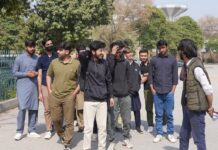
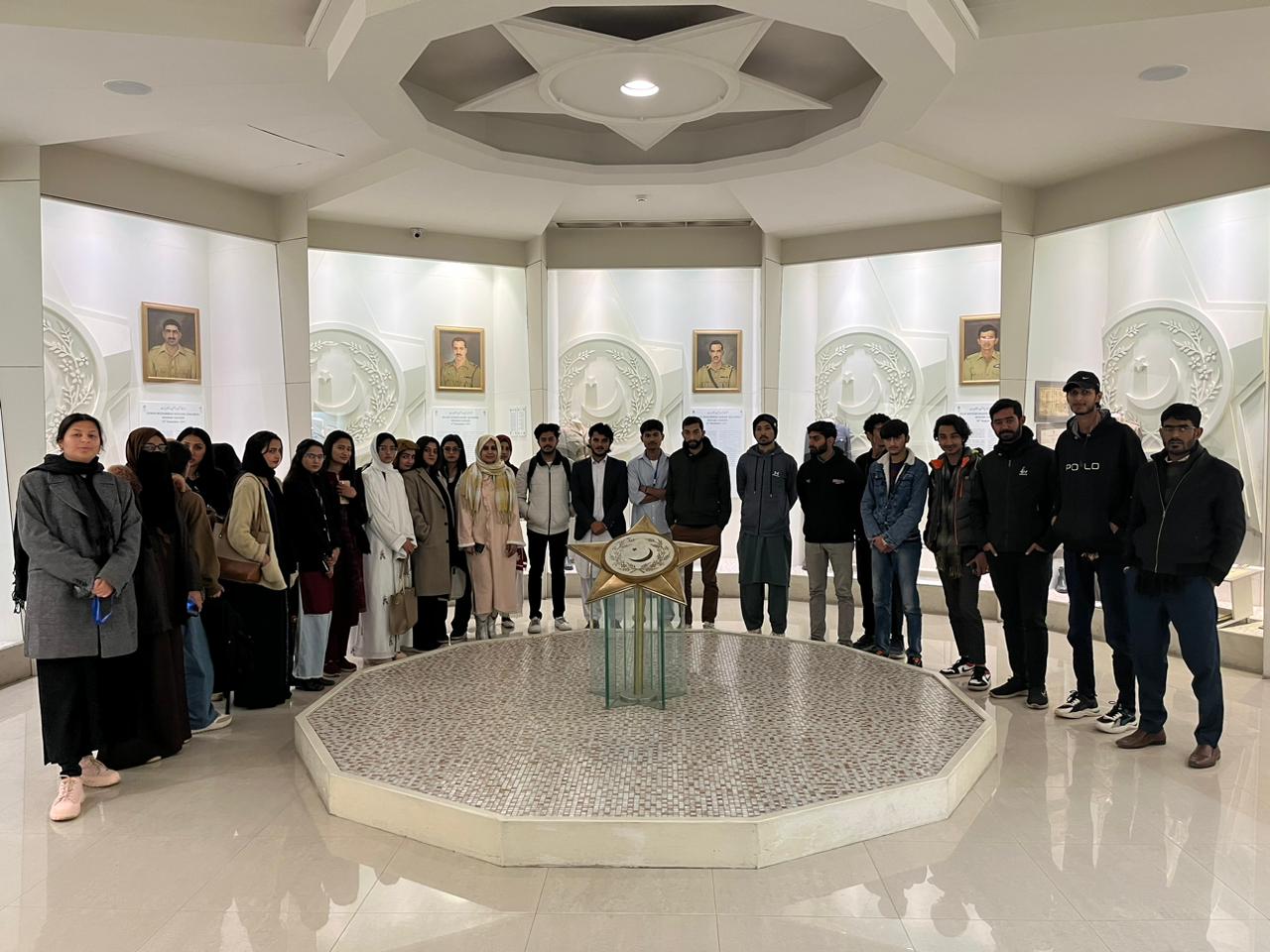
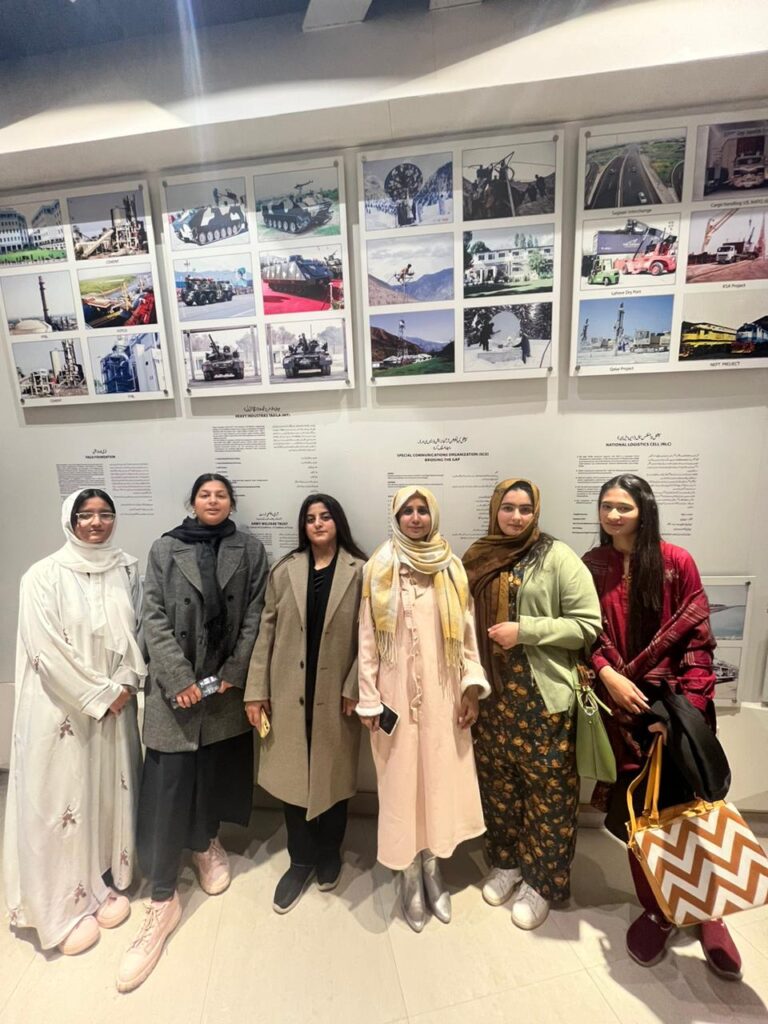
For students studying Pakistan Studies, the visit to the Army Museum offered more than information, it offered perspective. The experience allowed students from University of Rawalpindi to connect academic learning with the realities behind national history.
Organized as part of the Pakistan Studies course by Department of Digital and Computer Arts, the study visit was designed to move learning beyond slides and lectures. It created space for reflection, observation, and deeper understanding. The visit was supervised throughout, helping students relate museum exhibits to key academic concepts.
History That Speaks Without Words
Walking through the museum felt different from reading about history. The silence carried weight. The displays told stories without needing explanation.
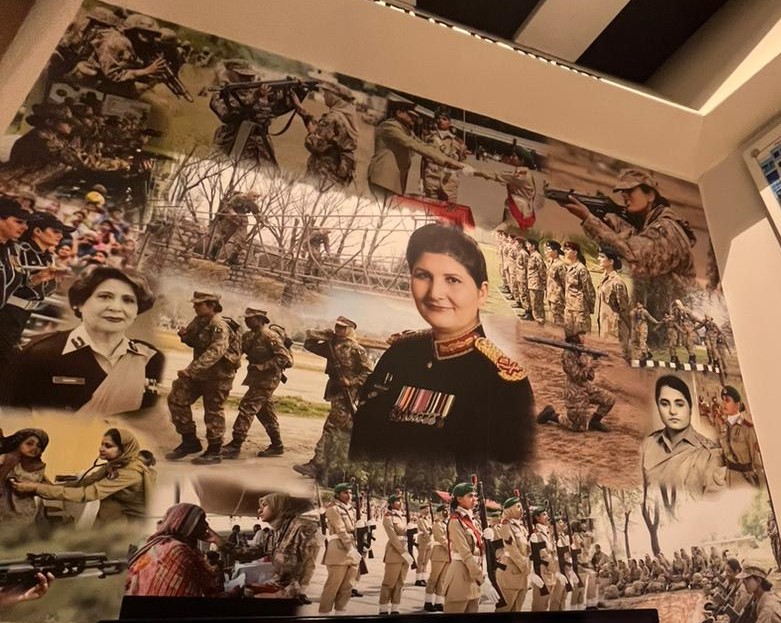
The Army Museum showcases Pakistan’s military journey through preserved weapons, uniforms, photographs, war models, and historical records. Each section captures a moment in time, conflicts fought, challenges faced, and sacrifices made in the service of national defense.
As students moved from one gallery to another, history unfolded visually. Events once confined to paragraphs now had form and presence. The exhibits encouraged students to pause, reflect, and absorb what those moments meant beyond dates and headlines.
Connecting Theory with Reality
The primary aim of the visit was to bridge theory with real-world evidence. According to UNESCO, museums play a vital role in education by promoting cultural understanding, critical thinking, and historical awareness.
Concepts discussed in Pakistan Studies, national security, defense strategy, and collective responsibility, felt more grounded when seen through authentic artifacts and historical documentation.
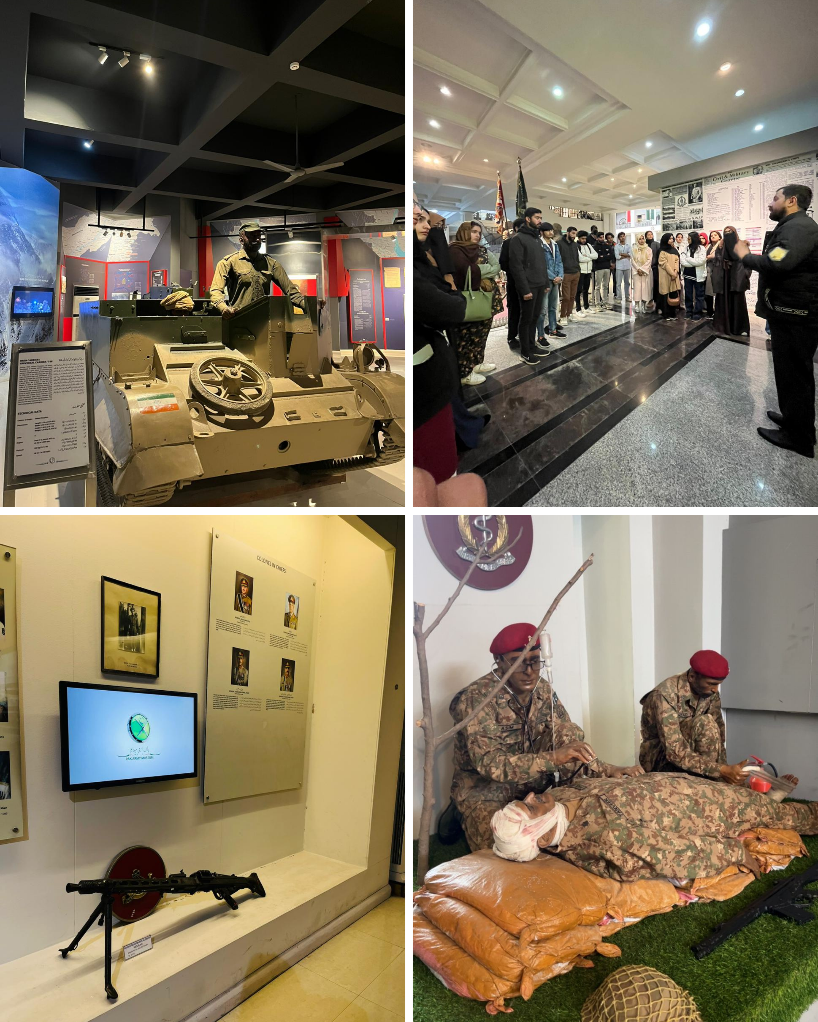
Students gained insight into key military strategies and significant moments in Pakistan’s defense history. More importantly, they understood the human dimension of these events.
Behind every display was a story of resilience, courage, and commitment.
This shift, from abstract learning to tangible experience, made the subject feel relevant and alive.
Guided Learning That Added Depth
Throughout the visit, Dr. Saniya Moazzam provided academic context and thoughtful explanations. Her guidance helped students connect exhibits to broader themes of national identity and historical continuity.
Rather than simply observing, students were encouraged to think critically. Why were certain decisions made? How did historical events shape present realities? What lessons can be drawn for future generations?
This approach transformed the visit into an interactive learning experience rather than a passive tour.
Diverse Perspectives, Shared Learning

Students from multiple departments, including Digital Design and Computer Arts, Psychology, and BBA, participated in the visit. This diversity brought fresh perspectives into discussions and reflections.
Students engaged actively, sharing observations and interpretations with peers. Conversations moved beyond facts toward meaning. The museum setting naturally encouraged curiosity and dialogue, allowing students to learn from one another as much as from the exhibits themselves.
The experience also strengthened observational skills. Visual learning, combined with discussion, helped students retain information more effectively and think more deeply about historical narratives.
Understanding Sacrifice and Responsibility
While the visit fostered respect for national history, it also encouraged thoughtful reflection. Students explored the role of the armed forces not only in defense but also in peacekeeping and humanitarian efforts.
This broader understanding shifted the idea of patriotism from slogans to awareness. History became a reminder of responsibility, toward unity, resilience, and informed citizenship.
Students left with a clearer sense of how the past continues to shape the present.
Why Study Visits Still Matter
In a fast-paced digital world, physical learning spaces hold unique value. Museums slow learning down. They invite reflection. They encourage students to engage with history on their own terms.
This study visit demonstrated the power of experiential learning. It showed how stepping outside the classroom can strengthen academic understanding and spark deeper interest in the subject.
Learning, after all, doesn’t stop at the classroom door.
Lessons That Stay Long After the Semester Ends
The Army Museum visit was more than a course requirement. It was a moment of connection, between students and history, theory and reality, learning and reflection.
By integrating experiential learning into academic courses, University of Rawalpindi continues to support education that is meaningful, relevant, and lasting. These experiences shape students into informed individuals who understand not just where they are going, but where they come from.
About the UOR Student Blog
The UOR blog highlights academic experiences, educational visits, and campus initiatives that enrich student learning beyond the classroom. It reflects the university’s commitment to practical, experience-driven education that prepares students for the world ahead.