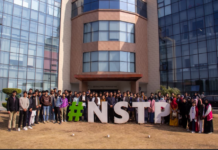

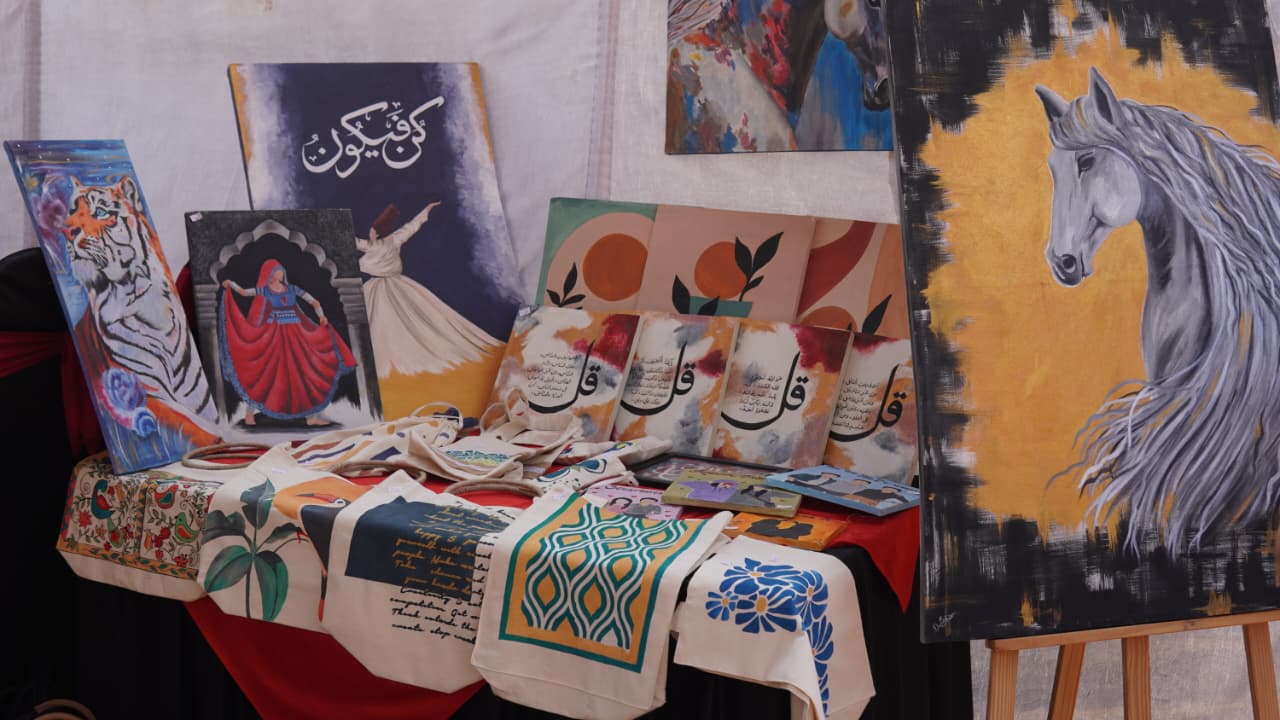
Across Pakistan, universities are grappling with a familiar challenge: graduates leave with degrees, but often without the confidence or practical skills to turn ideas into viable careers. Employers frequently point to gaps in communication, problem-solving, and real-world decision-making: skills that cannot be mastered through lectures alone. UOR Entrepreneurship Gala 2025 offered students a rare opportunity to translate classroom concepts into real entrepreneurial practice.
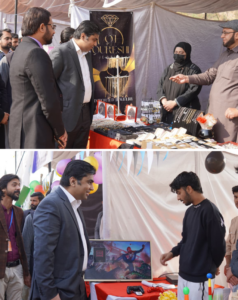
So, how can universities shift entrepreneurship education from theory to practice? One recent initiative at University of Rawalpindi offers a compelling answer. UOR Entrepreneurship Gala 2025, held from December 11 to 13, transformed the campus into a living marketplace where students tested ideas, interacted with customers, and experienced the realities of running a business, even if only for three days.
Why Experiential Learning Matters Now: UOR Approach
Through UOR Entrepreneurship Gala 2025, students experienced entrepreneurship as a practical, skills-driven process rather than a theoretical concept. Globally, higher education is moving towards experiential and project-based learning, especially in business and entrepreneurship.
According to UNESCO, skills such as creativity, adaptability, and entrepreneurial thinking are increasingly essential in economies facing rapid technological and social change. Similarly, the World Bank has highlighted that countries with young populations like Pakistan must prioritize practical skill development to reduce graduate unemployment and underemployment.
In Pakistan, this need is particularly urgent. While entrepreneurship is often promoted as a solution to limited formal employment, students rarely get the opportunity to practice entrepreneurship within their degree programs. Business plans remain hypothetical, and marketing strategies are discussed more than executed. This is the gap that UOR’s Entrepreneurship Gala aimed to address.
UOR Entrepreneurship Gala 2025: Learning Entrepreneurship by Doing
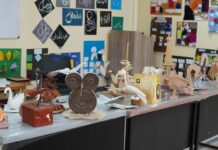
Organized by the Department of Applied Business and Economics, UOR Entrepreneurship Gala 2025 was designed as a hands-on learning experience, not a symbolic event. Students were tasked with conceptualizing, branding, marketing, and selling real products and services on campus.
What made the initiative distinctive was its interdisciplinary collaboration. Students from:
• Applied Business and Economics
• UOR student societies
• The Department of Digital Design and Computer Arts
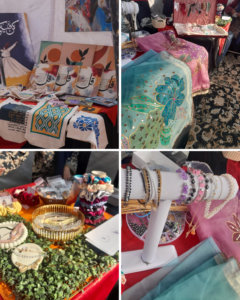
Worked together to design stalls, develop brand identities, and engage directly with customers. From pricing decisions to customer persuasion, students encountered the same challenges faced by small businesses in the real world.
As the event unfolded, many teams adapted their pricing and messaging based on customer feedback, learning firsthand how markets respond to value, presentation, and trust.
A Real Example: Sweet Circles’ Winning Experience
One of the most notable success stories from the gala was Sweet Circles, which secured first position. Team members Rafay Waseem and Zarnab Fatima described the experience as both challenging and deeply rewarding.
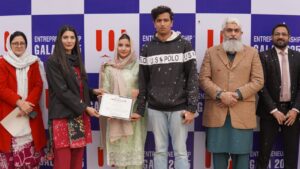
Through their entrepreneurial stall, the team translated classroom concepts into practice by managing product planning, cost-based pricing, customer relationship management, and on-ground sales execution. Direct interaction with customers allowed them to refine their value proposition and adjust strategies in response to real-time market behavior.
Reflecting on their journey, the team highlighted how the gala strengthened their communication, negotiation, teamwork, and decision-making skills, while reinforcing confidence in applying academic knowledge to real business contexts. For them, the gala functioned as a bridge between theory and practice, demonstrating how small ventures operate under real conditions.
Industry Engagement and Real-world Feedback
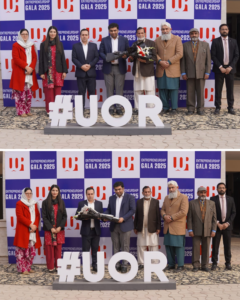
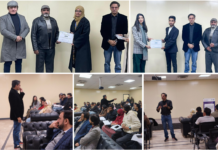
A critical element of the gala was the involvement of external evaluators, including representatives from the State Bank of Pakistan, the Small and Medium Enterprise Development Authority (SMEDA), and professionals from the education sector.
Rather than focusing only on competition rankings, evaluators assessed stalls on:
• Feasibility of the business idea
• Creativity and innovation
• Marketing strategy
• Professional conduct
For many students, this was their first interaction with industry professionals outside formal internships. The feedback they received: on cost structures, scalability, and customer targeting provided insights that are rarely captured in written exams.
Impact and Early Lessons from the Gala
While a three-day event cannot turn every participant into an entrepreneur, its educational impact was clear.
Students reported:
• Increased confidence in pitching ideas
• Greater awareness of customer behavior
• Improved teamwork and communication skills
Equally important, the gala fostered a culture of experimentation. Some ideas succeeded, others struggled but failure itself became a learning outcome. The gala provided valuable hands-on experiential learning by effectively bridging theoretical classroom concepts with real-world entrepreneurial practice.
By doing so, it directly aligned with key United Nations Sustainable Development Goals, including SDG 4 (Quality Education) by promoting practical, skills-based learning; SDG 8 (Decent Work and Economic Growth) by nurturing entrepreneurial thinking and employability; and SDG 9 (Industry, Innovation, and Infrastructure) through encouraging innovation, creativity, and small-scale enterprise development. This aligns with research published in Springer on entrepreneurship education, which shows that early exposure to real-world risk helps students develop resilience and problem-solving abilities.
Broader Implications: What Other Universities can Learn
UOR’s Entrepreneurship Gala 2025 raises a broader question for higher education in Pakistan: Should entrepreneurship be taught primarily through lectures, or experienced through structured practice?
Three lessons stand out for other institutions:
• Short, low-risk experiments work
Even brief, campus-based initiatives can provide meaningful exposure to entrepreneurship without requiring large budgets.
• Interdisciplinary collaboration adds value
Bringing together business, design, and technology students mirrors real startup environments and strengthens outcomes.
• External feedback matters
Industry participation grounds student learning in reality and enhances credibility.
Initiatives like UOR Entrepreneurship Gala 2025 demonstrate how experiential learning can strengthen entrepreneurship education in Pakistan. These are scalable ideas that other universities: public and private, can adapt to their own contexts.
What UOR Entrepreneurship Gala 2025 Reveals About Experiential Learning
The gala was more than a campus event. It was a practical demonstration of how universities can bridge the gap between academic learning and real-world application.
UOR Entrepreneurship Gala 2025 showed that when students are trusted with responsibility, space, and guidance, they rise to the challenge. As Pakistan’s higher education sector looks to prepare graduates for uncertain futures, initiatives like this offer a valuable blueprint.
The real question now is not whether experiential learning works but how consistently universities are willing to embed it into everyday teaching.
Interested in learning more about how UOR integrates experiential learning, entrepreneurship, and industry engagement into its academic programs?
Explore related initiatives from the Department of Applied Business and Economics and upcoming student-led projects on the UOR Blog.